Guides & advice
Know your trees before you cut them.
Practical, jargon-free advice on the trees in your garden — how to spot trouble, when to prune, and when to call a professional. Written by Nnadi and the Elementree Care team.
Ash dieback: how to spot it before the tree becomes dangerous
Ash dieback is now widespread across the Chilterns. Learn the tell-tale signs — blackened leaves, diamond lesions on the bark, thinning crowns — and why an infected ash near a path or boundary needs assessing sooner rather than later.
Guide · Elementree Care
A month-by-month pruning calendar for common garden trees
Prune the wrong tree at the wrong time and you invite disease or a season of weak growth. Our simple calendar covers apples and pears, cherries and plums, birch and maple, and the evergreens — so you cut when the tree wants you to.
What a Tree Preservation Order actually means for you
A TPO doesn't mean you can never touch the tree — but it does mean you need the council's written consent first. Here's how to check if your tree is protected, what you can and can't do, and how we handle the application.
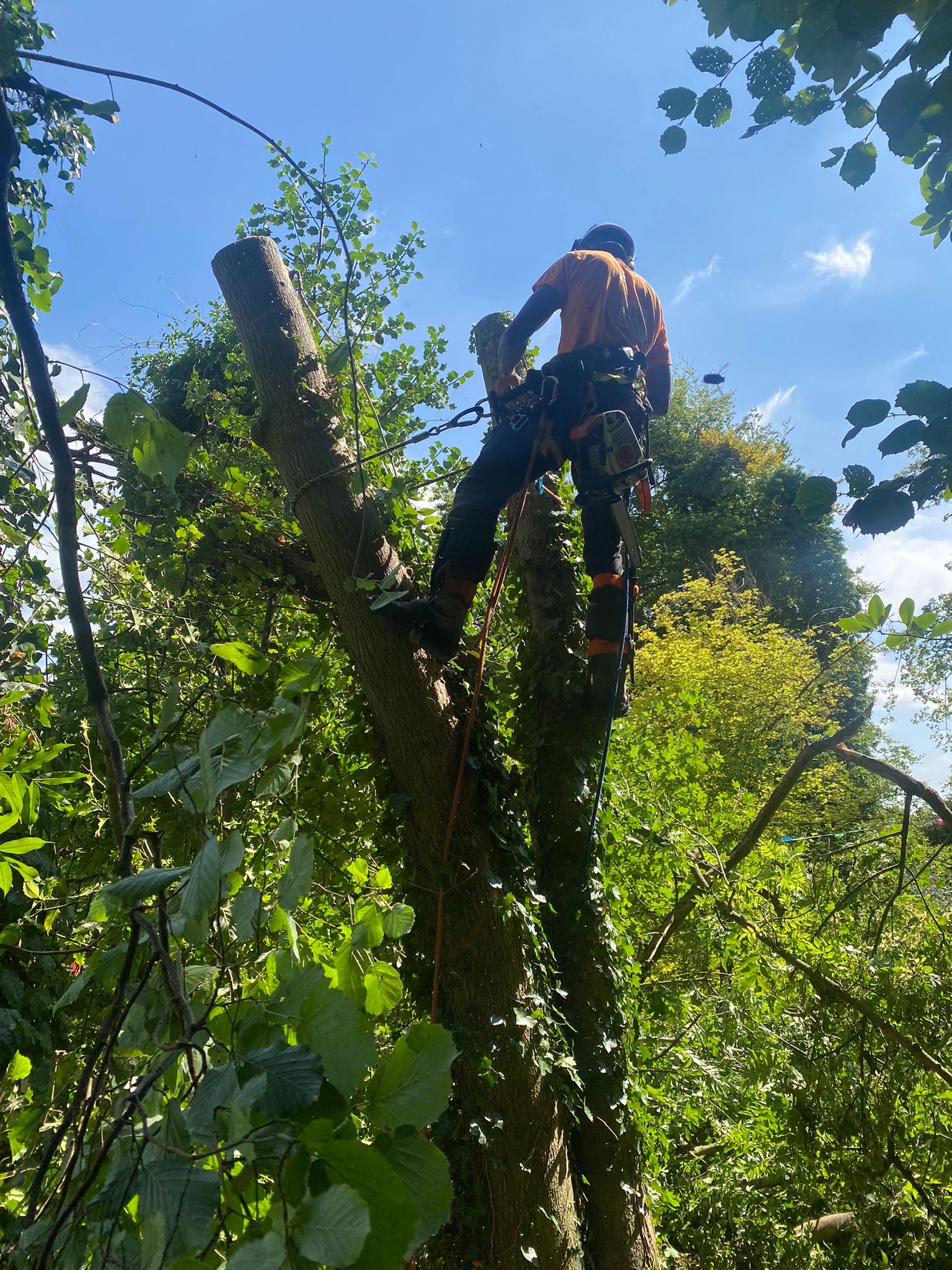
When NOT to do your own tree work
Loppers on a low branch are fine. A chainsaw up a ladder, or anything involving a rope, a big limb over a fence, or a dead tree, is a different world. The honest guide to where DIY stops and a call to an arborist starts.
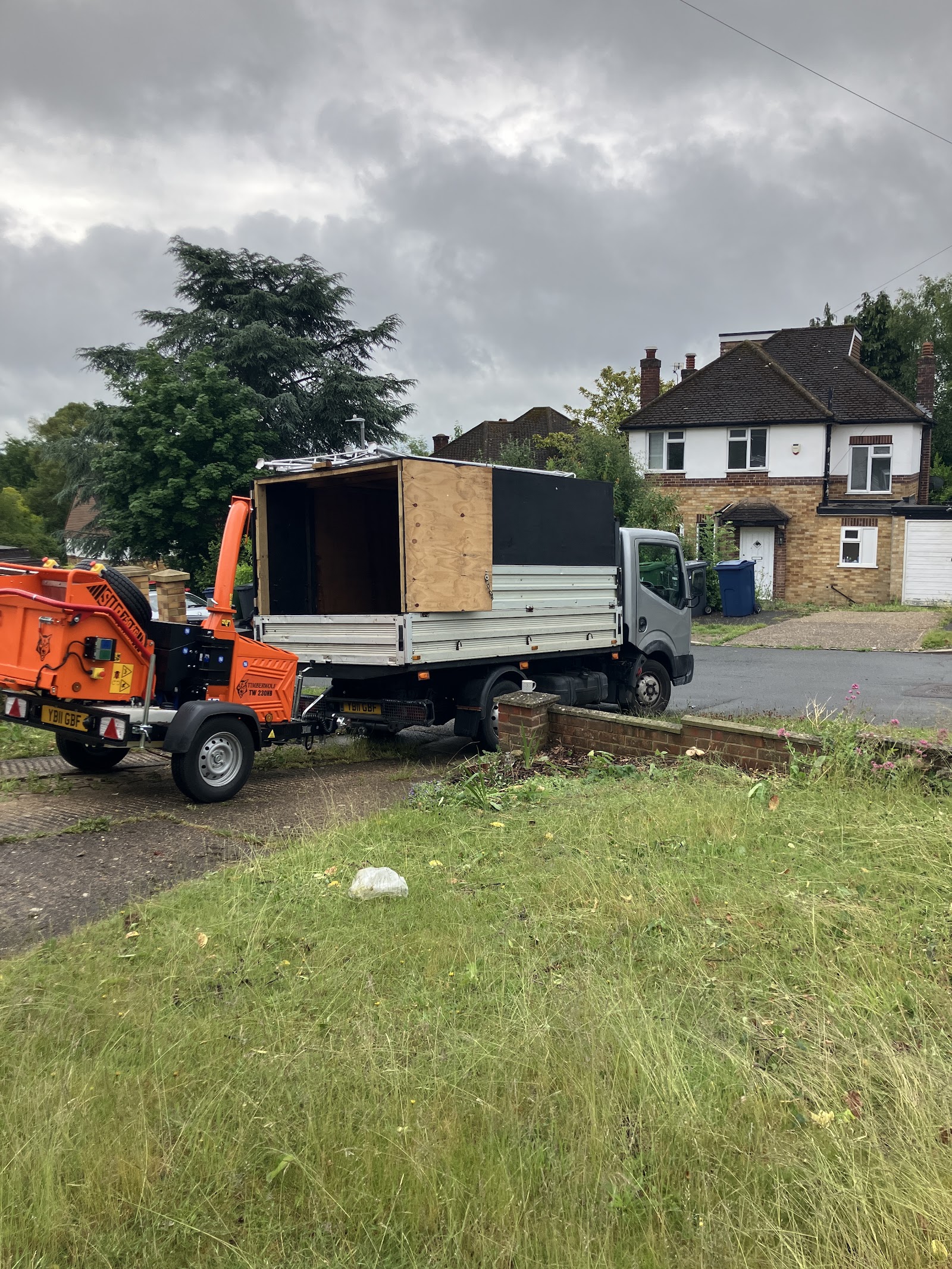
How to read a tree surgery quote (and spot a bad one)
Why is one quote half the price of another? Usually it's what's left out — insurance, disposal, TPO checks, making good. Here's what a proper quote should spell out, and the red flags that mean 'walk away'.
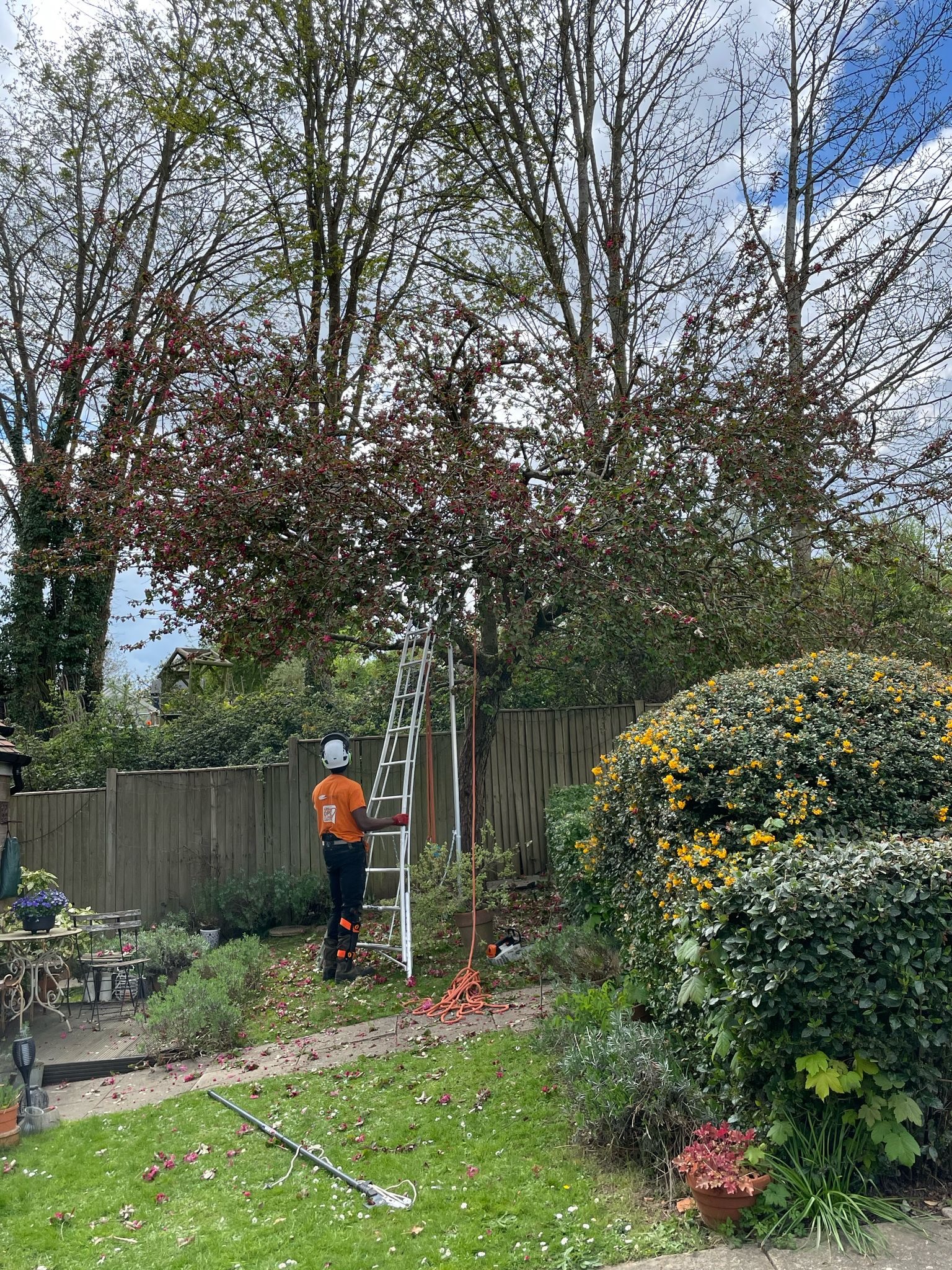
Crown reduction vs topping: why the difference matters
They can look similar from the ground, but one keeps a tree healthy and the other slowly kills it. What crown reduction really involves, why topping causes weak regrowth, and how to ask for the right thing.
A tree's come down in the storm — what to do first
Stay clear of anything touching power lines, keep people and cars away, photograph the damage for your insurer — and then call. A calm checklist for the worst-weather moments, from a team that answers 24/7.
Planting a new tree: right tree, right place
The best time to plant a tree was twenty years ago; the second best is this winter. How to choose a species that suits your soil and space — and won't be undermining your foundations or blocking your neighbour's light in a decade.
Guides are published as our schedule allows — the topics above are what we're asked about most.
Common questions
Straight answers, before you call.
Do I need permission to work on a tree in my own garden?
Sometimes. If the tree has a Tree Preservation Order (TPO) on it, or your property is in a conservation area, you need written consent from the council before most work can start — even if it's your tree. We check the status for you before quoting and, where consent is needed, we prepare and submit the application on your behalf. Working on a protected tree without consent can mean a substantial fine, so it's always worth checking first.
What's the difference between crown reduction, thinning and topping?
Crown reduction shortens the whole crown evenly to reduce a tree's size while keeping its natural shape. Thinning removes a proportion of the smaller branches throughout the crown to let more light and wind through, without changing the overall size. Topping — cutting the top off a tree to stubs — is different, and we generally avoid it: it stresses the tree and forces weak, dense regrowth. Where a tree genuinely needs its height managed long-term, proper pollarding is usually the right answer instead.
When is the best time of year to prune?
It depends on the species. Most deciduous trees are best pruned in late autumn or winter when they're dormant. But some are exceptions — cherries and plums are pruned in summer to avoid silver leaf disease, and trees like walnut, birch and maple 'bleed' sap heavily if cut in late winter or spring, so they're best left until mid-summer. Formative and dead/dangerous work can be done at any time. Tell us the species and we'll advise on timing.
Will you take the wood and mess away, or can I keep it?
Whichever you prefer. As standard we chip the brash and take all arisings away, leaving the site clear and swept — the point every one of our reviews mentions. If you'd like to keep the logs for firewood or the wood chip for beds and paths, just say and we'll stack it neatly for you instead. It's your wood.
How do you price a job — day rate or fixed quote?
A fixed, written quote for the specific work, not a vague day rate. We look at the tree, its condition and everything around it, then give you one clear price that covers the work, the clear-up and disposal. If a TPO application is needed we'll tell you before anything starts. No surprises added on the day.
Is a felled tree the end of it, or do I still have a stump?
Felling leaves a stump, which can regrow, get in the way and become a trip hazard. If you want the space back for lawn, planting or paving, we grind or dig the stump out to whatever depth you need — one client asked for stumps taken to 500mm below ground level so the garden could be fully reclaimed. We chase the main roots where it matters and backfill the hole.
My neighbour's tree overhangs my garden — what are my rights?
In England you're generally entitled to cut back branches (and roots) that cross your boundary, back to the boundary line — but there are important caveats around protected trees, whose the cuttings are, and not entering the neighbour's land. It's an area where a calm, expert conversation usually beats a dispute. See our Neighbour Trees & Boundaries page, or call us — we regularly act as the neutral technical voice between neighbours.
Do you cover emergencies and storm damage?
Yes — 24 hours a day. If a tree or large limb has come down, split, or is threatening a roof, drive or road, call and we'll come out to make it safe. We'll also advise on what to photograph for an insurance claim. See our Emergency Callout page for what to do while you wait for us to arrive.
Still not sure?
There's no such thing as a silly tree question. Send Nnadi a photo and he'll tell you what he'd do — and whether it even needs doing yet.